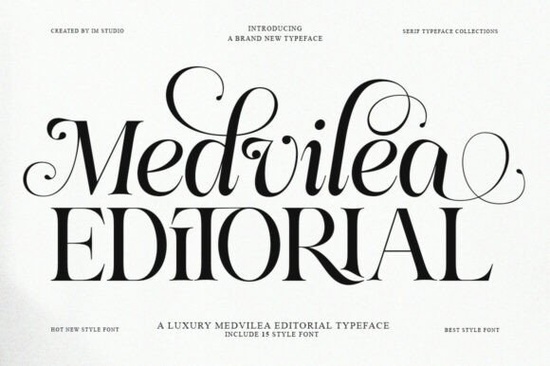
If you’ve been searching for a font that brings quiet confidence and refined elegance to your layouts, Medvilea Editorial Font might be exactly what you need. It’s not flashy or overdesigned instead, it leans into subtle contrast, graceful curves, and thoughtful spacing that make it feel at home in high-end branding, editorial spreads, or even minimalist packaging. With 15 distinct styles included, it gives you room to adapt without losing cohesion.
What makes this font stand out for real-world projects?
Designers who work with luxury brands, boutique publishers, or fashion clients often struggle to find fonts that look expensive without being ornate. Medvilea Editorial fills that gap. The letterforms are clean but not sterile there’s warmth in the stroke transitions and a rhythm to the spacing that helps text breathe on the page. You’ll notice how well it pairs with photography-heavy layouts or sparse, modern compositions.
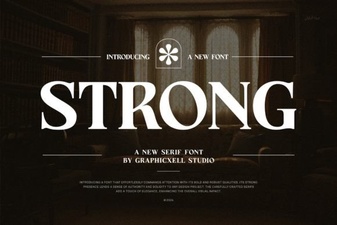
It also plays nicely with other serifs. If you’re already using something like Sharp History for body copy, Medvilea can take the lead as your display face without clashing. Or if you want to layer it with something bolder like Strong, the condensed variants hold their own while keeping things legible.
Which version should I use for my project?
The 15 styles aren’t just weight variations they’re purpose-built for different visual roles:
- Regular & Italic Your go-to for headlines that need presence without shouting.
- Condensed & Semi-Condensed Perfect when space is tight but elegance isn’t optional (think business cards or product tags).
- Expanded & Extra-Expanded Ideal for hero titles, magazine covers, or anything meant to command attention from a distance.
- Italic variants across widths Add movement and sophistication to quotes, captions, or accent lines.
One underrated trick? Use the Semi-Condensed Italic for subheadings under an Extra-Expanded headline. The contrast creates instant hierarchy no extra styling needed.
Who actually benefits from owning this font?
It’s not just for agencies or big studios. Here’s where it shines for smaller creators:
- Print-on-demand sellers Elevate your Etsy shop listings with premium-looking mockups for journals, apparel tags, or cosmetic labels.
- Crafters making digital templates Wedding invites, planner pages, or social media quote graphics gain polish without looking “designed by committee.”
- Small business owners A local boutique, salon, or artisan brand can use the Regular weight for logos and the Condensed for packaging all from one purchase.
- Hobbyists building personal brands Even if you’re just designing your own blog or newsletter, this font adds quiet authority.
Does it support non-English languages?
Yes and thoroughly. Beyond standard Latin characters, it includes extended glyphs for Western, Central, and some Eastern European languages. That means you can confidently use it for bilingual brochures, international product lines, or multilingual social campaigns without switching fonts mid-project.
Also worth noting: punctuation and numerals are designed with the same care as the letters. Currency symbols, fractions, and even stylistic alternates are included small details that matter when you’re typesetting real content, not just placeholder text.
How does it perform in digital formats?
Better than most display serifs. Because the strokes are balanced and the x-height is generous, it remains readable even at smaller sizes on screens. Try the Regular weight for web headers or the Semi-Expanded for Instagram story text overlays. Avoid the thinnest weights below 16px, though save those for print or large-format displays.
Exporting SVGs or PNGs for merch? The outlines stay crisp. No weird rendering artifacts or lost serifs at common export resolutions.
Quick checklist before you start designing:
- Install all 15 styles don’t just grab the Regular. You’ll thank yourself later.
- Test pairing it with a simple sans-serif (like Inter or Lato) for body text contrast.
- Use tracking (letter-spacing) sparingly the font’s natural rhythm usually doesn’t need adjustment.
- For print: Stick to heavier weights on uncoated paper; lighter weights shine on glossy stock.
- Save a style guide snippet note which weights you used for H1, H2, captions, etc., so future projects stay consistent.
If you’re ready to add a quietly luxurious serif to your toolkit, grab Medvilea Editorial while it’s still fresh. It’s the kind of font that disappears into the background when done right which is exactly why clients and readers remember the design, not the typeface.
Try It Free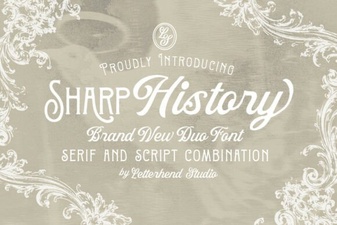 Sharp Fonts for Historical Data Visualization
 Powerful Typography for Web Design and Usability
 Elevate Your Design with Vintage Retro Script Fonts
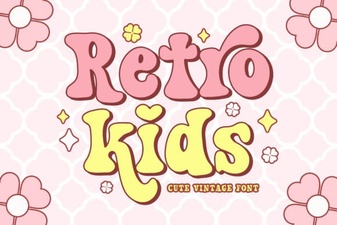 Crafting Projects with Retro Kids Font Styles
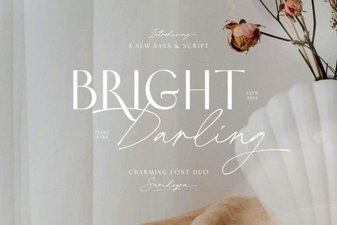 Bright Darling Duo: Creative Font Pairing Guide
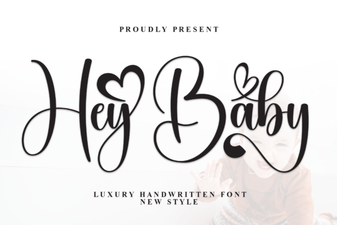 Hey Baby Font: a Fun & Creative Design Resource